

[023] Should you vibe code your own apps? (Part 1: Case Study)
I was told not to build it, but I did it anyway. Two apps, five hours of build time per app - here’s what I learned about solving your Founder Block by building your own tools, and why discipline...

“It doesn’t mean you should build it, just because you can” - was a conclusion of a conversation I had with my nerdy friend about everyone going crazy about building their own apps trying to replace all subscription costs they have.
And then I went and built 2 apps anyway.
Yes, I took a pause from developing client delivery robots for FlowOS Lab, and decided to answer a simple question:
Which daily activities make the biggest difference on a daily basis, but are feeling like pulling teeth when I’m doing them?
Then I made a list, and there were 2 obvious winners:
OUTREACH and CONTENT REPURPOSING
They are the 4% that produce the most immediate (outreach) and long-term (repurposing) results.
1/ What is the problem you’re trying to fix?

Instead of trying to orchestrate complex tools or automations that would do everything for me, I wanted to eliminate just one block that’s causing me to slow down these two activities.
A) Outreach
I’m not a big fan o social media, but most business conversations are happening on socials.
Plus, I’m having conversations about my services, affiliate partnerships, guest podcasts and need to be able to track and filter these to stay up to date.
In the past, I tried many different systems, Excel spreadsheets and Notion templates and just couldn’t get used to using them consistently.
The emphasis here is on using it daily. Otherwise even the fanciest app or a system makes no difference.
I needed literally a screen where I can log progress easily and see what’s happening without complex filters and spreadsheets, or fancy Hubspot type apps.
Plus, I’m big on engineering MicroWin moments, so I want to be able to track my streak of minimum one new “signal” per day.
B) Content Repurposing
Every week I spend hours on brainstorming and writing my essential Substack letters. And once I’m done, I rarely repurpose and post it on other social channels (even though I already have a full strategy for it).
You can just slice original content and paste it on other platforms. I mean, you could - but every platform has a slightly different way on how you present your content.
I even hired people in the past to manually do the repurposing for me, but would always spend way more time on editing their proposals than writing myself.
And I tried using prompts, and would end up getting tangled up in fighting with Mr. Robot on why they aren’t following instructions.
So, I wanted to see if I could create something where I can paste a Substack link (or copy my raw draft) and it creates content chunks while learning based on my feedback. That way I could “just” copy/paste raw materials and publish or schedule them on different socials.
2/ Filip, check yourself three times
You already know by now that I love building tech stuff, and it would be my “safe space” in the past. A perfect way to avoid real activities and tasks that required my attention.
That’s why I slowed down for a moment, and let the idea simmer for a day.
Like I’ve already shared: “It doesn’t mean you should build it, just because you can.”
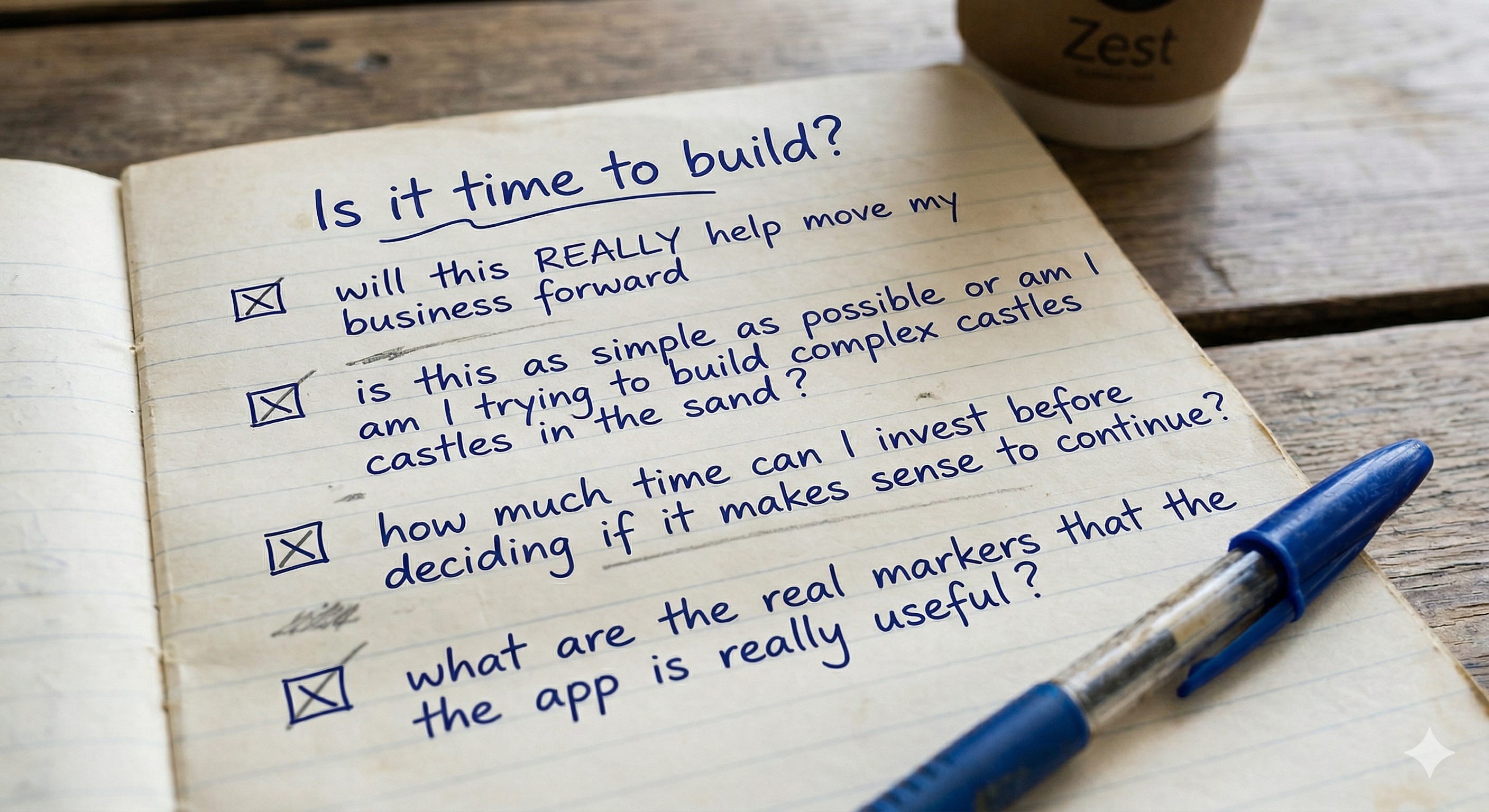
So I made a small mental checklist:
will this REALLY help move my business forward
is this as simple as possible or am I trying to build complex castles in the sand?
how much time can I invest before deciding if it makes sense to continue?
what are the real markers that the app is really useful?
And then it was…
3/ Time to build!
Important disclaimer: the point of my cases and examples isn’t to get you into a frenzy and feeling FOMO that you are missing out for not building your own apps.
The main point is to get you thinking about your own Founder Block - the one or two essential activities that are important but boring enough to keep getting pushed.
Trying to willpower and push through these works occasionally, but consistently fails as a long-term strategy. That’s exactly why I wanted to make both of these easier, and a little fun.
When I showed finished apps to clients and friends, some immediately got new ideas, others felt overwhelmed, so it’s normal to feel either way.
After sharing apps with them, few clients reached out and asked for help building something specific for their own delivery or outreach workflows.
This inspired me to start running FlowBuild 1:1 sessions - a focused 4-hour Zoom where we identify your one Founder Block, I prepare a systematic brief for Claude Code.
Then you share screen your screen with me and build the first working version of your tool, while I provide feedback and guidance when needed. By the end, you’ll have something that works and a working method for building faster on your own.
This is turning out to be very fun process for me and I’ve decided to open two extra slots over the next few weeks at founding pricing (DM me if you are interested or have questions).
Now, back to the tools.
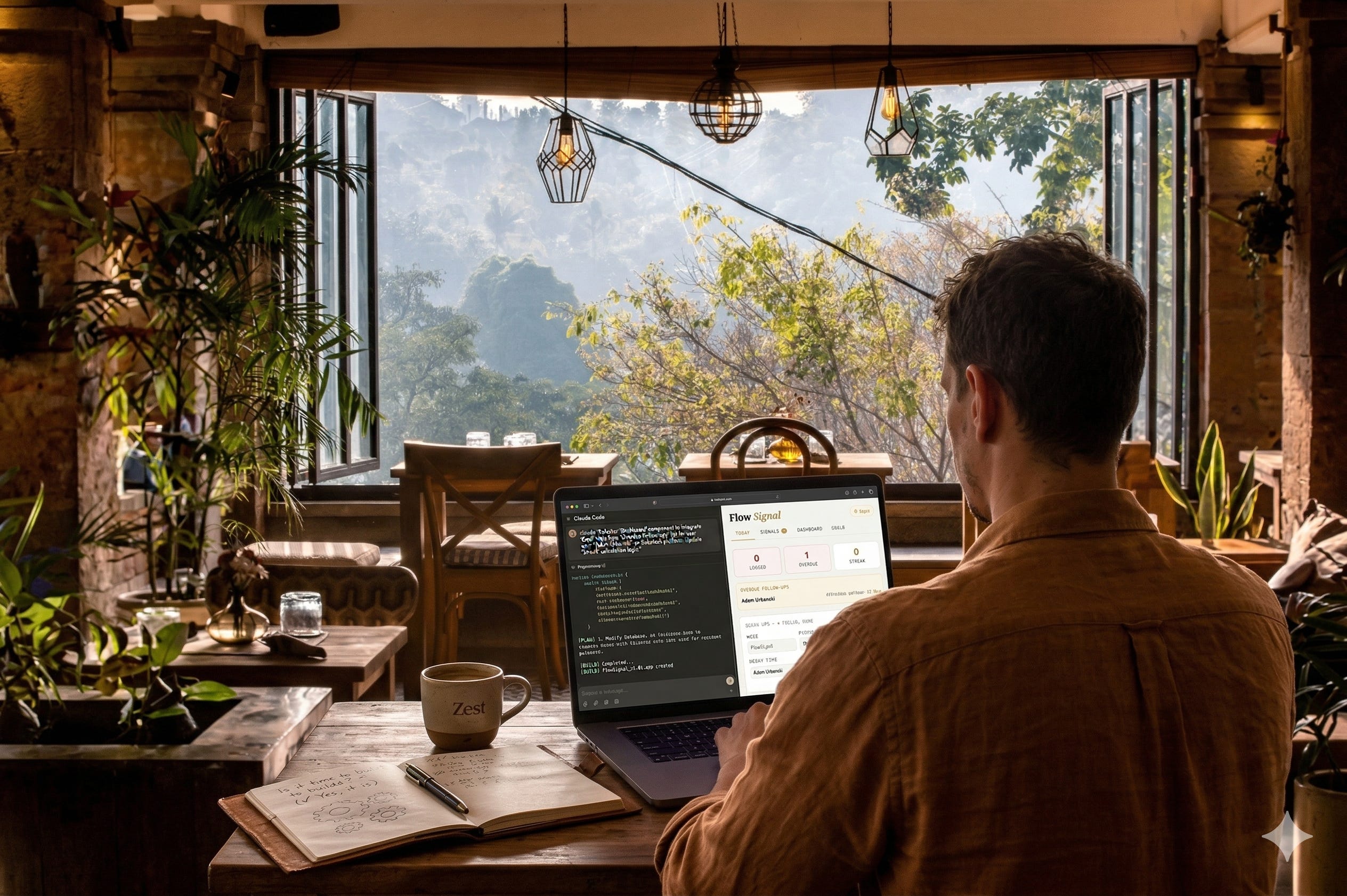
I’m using Claude for everything these days, so the only 2 tools I’m using for building websites and apps are:
Claude Chat (for strategy and brainstorming)
Claude Code (for actual coding)
Also, these apps were developed for me, and deployed on my local computer.
They are not your classical SaaS application you access online (with user accounts, settings, complex databases…) because it’s not necessary
And that’s one of the reasons why it’s easy to deploy your ideas.
4/ Case One: FlowSignal
The outreach tool seemed simpler, so I focused on it first and called it FlowSignal - since I’ll be logging different signals daily.
Here’s what I wrote in my notes as a starting point:
I need to be able to quickly log daily conversations on multiple platforms (less than a minute), and get automated reminders on a daily basis for conversations.
Those were the 2 key things, absolute essentials, and a solid starting point for Claude Chat to start brainstorming the process.
After seeing it was possible and way easier than I thought, I added a few more just to see what Claude would suggest:
have a simple dashboard to see if I’m actually getting results or just playing around
have a screen where I see a summary of activities instantly
add some fun to it (count streaks, get funny notifications and pick-me-up quotes)
be able to log from my phone as well
It took around 3 hours to get the first working version live, and then 2 more hours in total to fix some bugs while testing the app.
And to be honest, I couldn’t believe I had a real working version. For something similar it would take weeks of dedicated work and thousands if I were to pay a freelancer to do it for me.
Here’s how it actually looks:
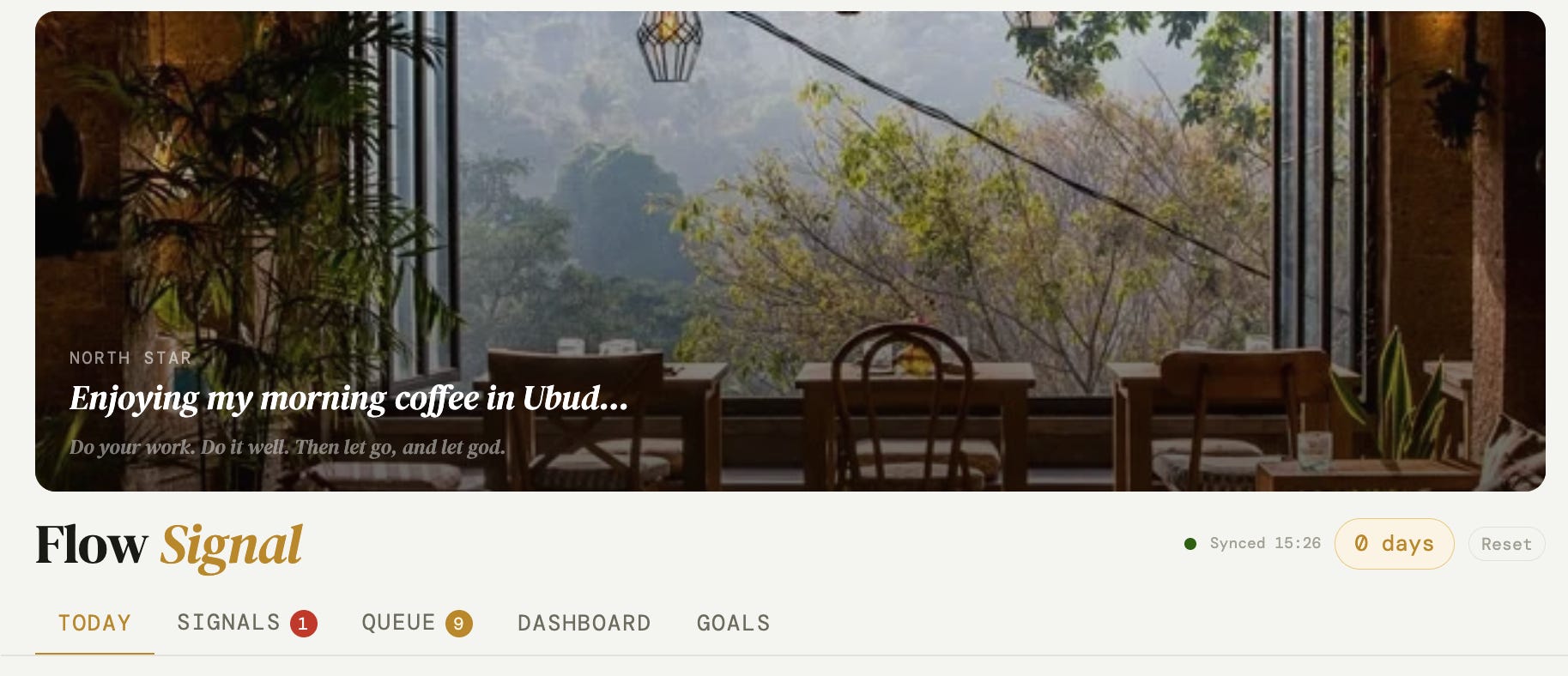
Today (home screen)
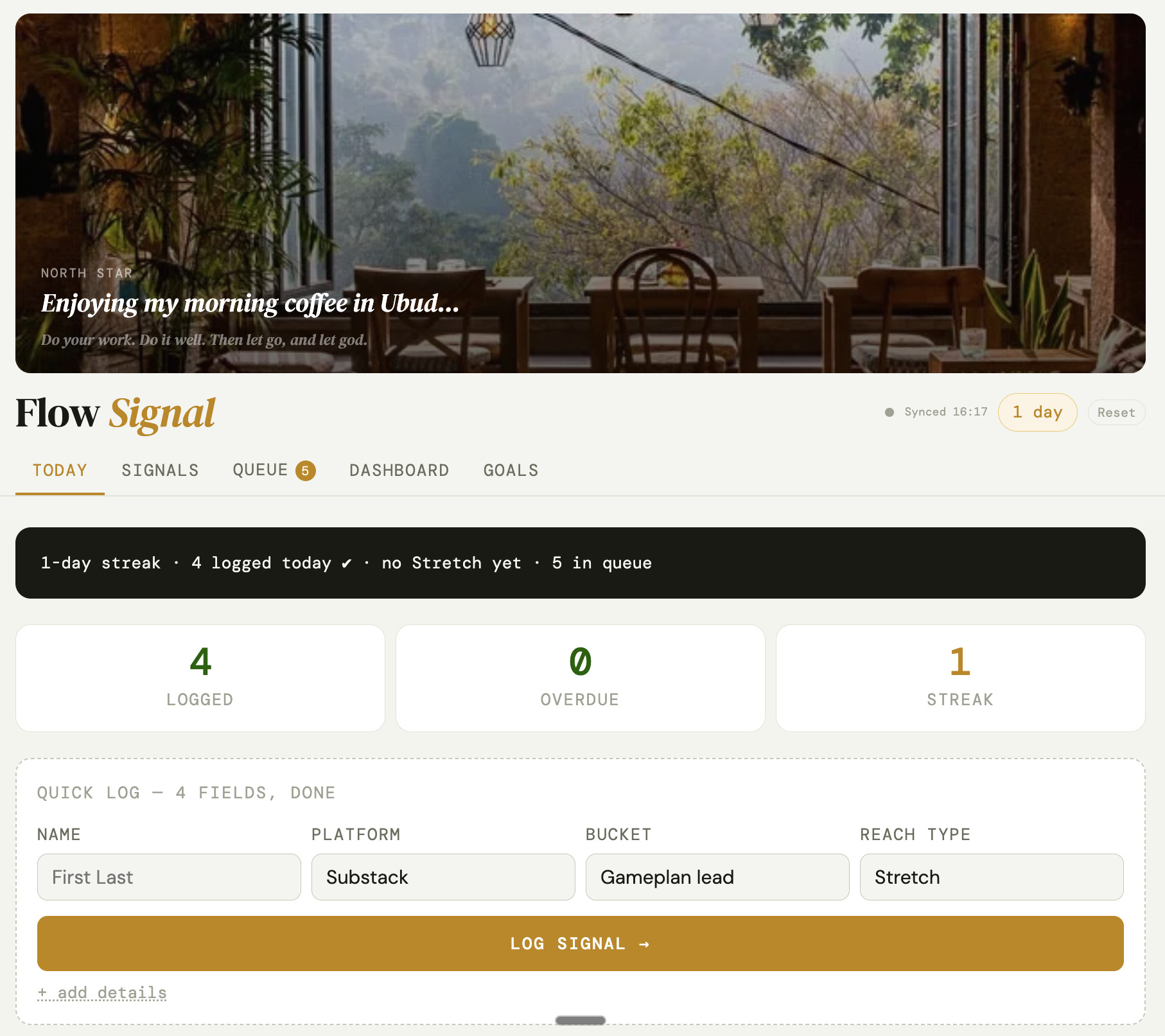
Super simple, with all the important daily info and reminders in one place, plus a “quick log” option which is the most important feature. There’s also a streak tracker to gamify the entire thing.
I lost my first streak because I didn’t log anything over the weekend, and it just feels wrong to see that 0 (zero) staring at me. That’s motivating in a weird way and now I feel kinda bad about losing it, so over the next weekend I will try to log at least one new convo per day.
That’s MicroWin design doing its job. Not a big win (like sale made or deal closed) - just a small, visible signal that you showed up.
There’s also a minimalistic vision board on the top that changes as I set different goals - current goal is focus on travelling back to Ubud soon, drinking specialty coffee from one of my favorite places (Zest Ubud).
Signals
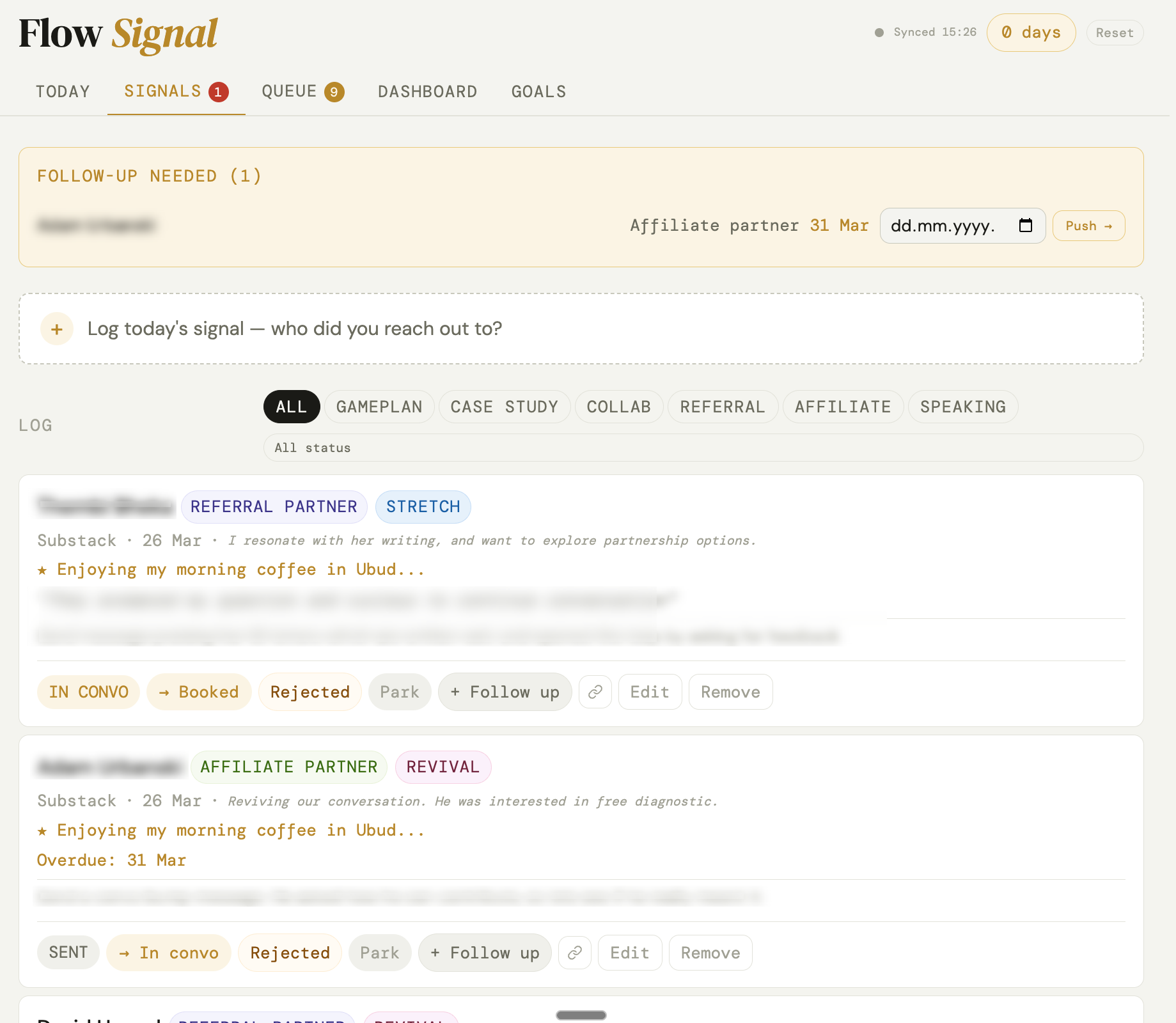
This is where all my communication lives (think of your Excel sheets, but better). It’s where I can access all my convo logs easily and see what’s happening with each person.
Dashboard (analytics)
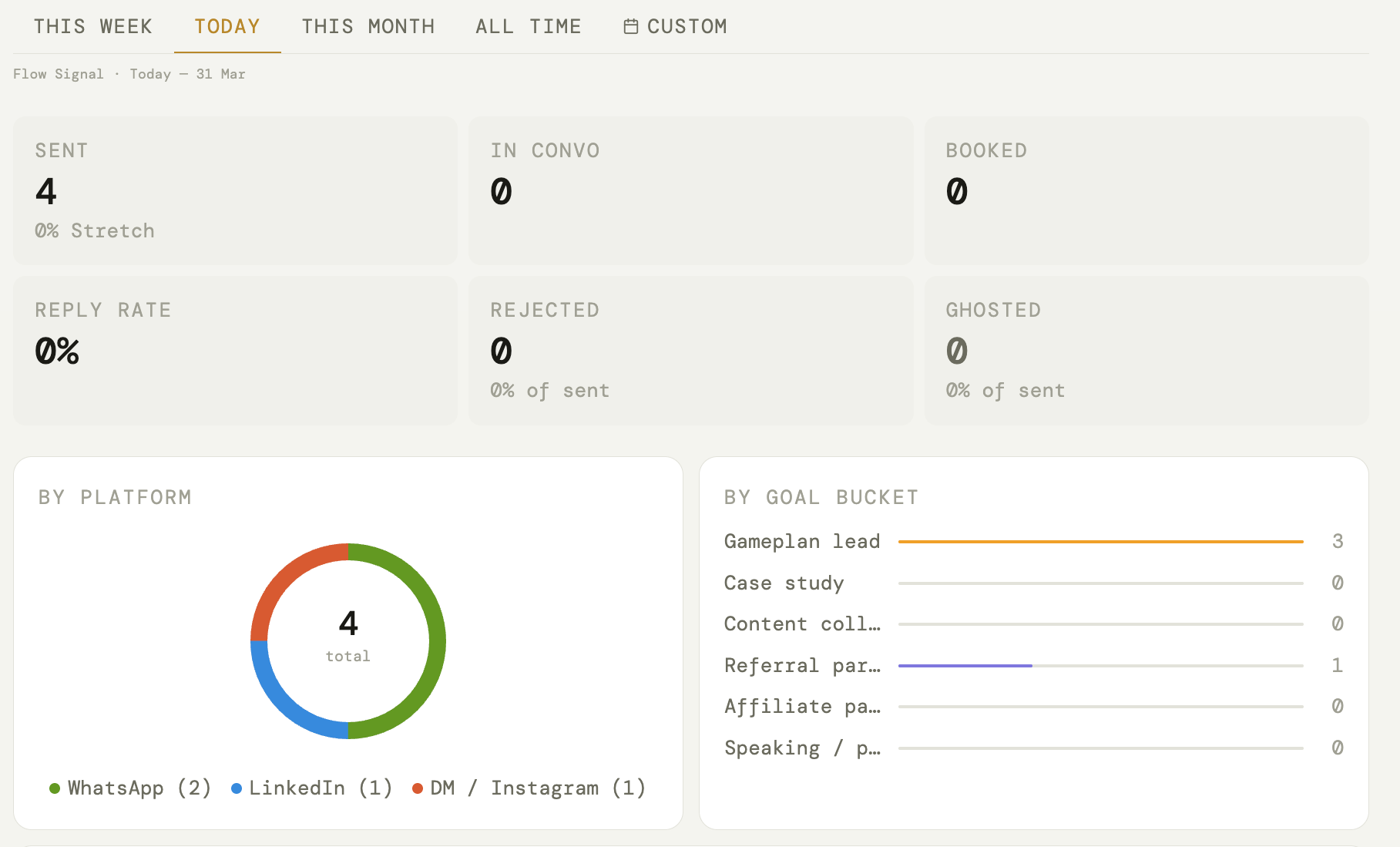
Where I can see what’s been happening over time, and a few other cool indicators that I’m sharing only with my clients and the Flow Community.
There’s also a Queue - a new addition where I add pending contacts, and Goals - where I add my goal and track progress toward it based on different signals.
I have a list of additional features and some AI functionalities I want to add in the future, but first: keeping the streak alive. Which was one of the main reasons to build the app.
5/ How to start vibe coding your own app
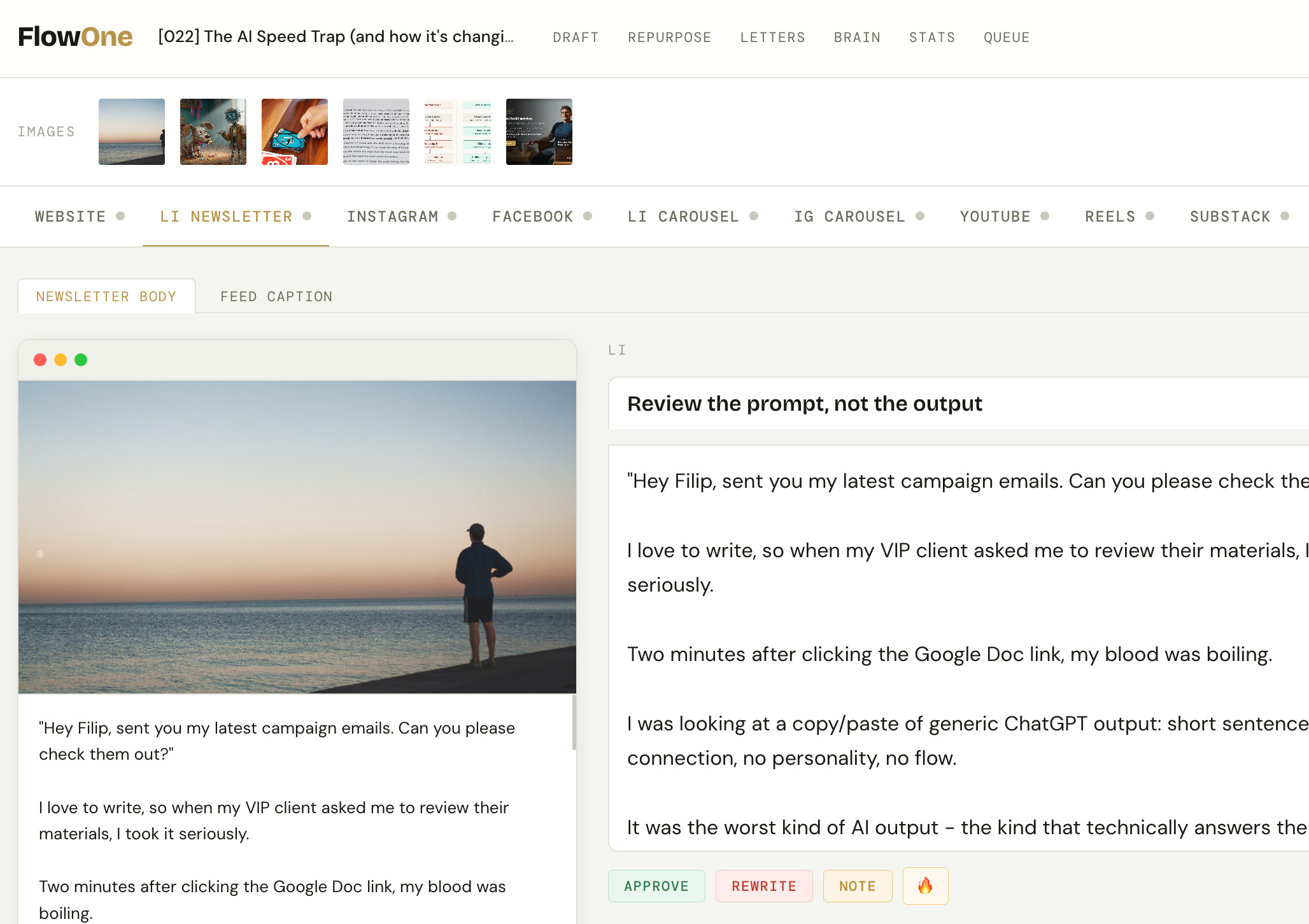
Don’t worry, I didn’t forget about the “outreach” tool, but this letter is already way too long. You can read part 2 and FlowOne case study here:
Building Your Own Substack Repurposing App - 40 Pieces, 45 Seconds, $0.30 (Part 2: Case Study)

If you’re just landing here, this is Part 2 of a two-part series on vibe coding your own business apps. Part 1 covers FlowSignal, my outreach tracker, and the one piece of advice I ignored to build it so it’s worth reading first.
There are plenty of tutorials and YouTube videos on how to get started with your apps, and I’m not interested in creating a step-by-step program for it.
What I’m interested in is helping you figure out what that ONE Founder Block is for you, and how you can solve it by building your own thing.
If you want to start there and reserve FlowBuild session to build your own tool - send me a message and I’ll share more details about the remaining founder spots.
-Filip “let’s build” Sardi
PS. Reminder that I’ve started running FlowBuild 1:1 sessions - a focused 4-hour Zoom where we identify your one Founder Block and app/tool to solve it. I prepare a systematic brief for Claude Code.
Then you share screen your screen with me and build the first working version of your tool, while I provide feedback and guidance when needed. By the end, you’ll have something that works and a working method for building faster on your own.
This is turning out to be very fun process for me and I’ve decided to open two extra slots over the next few weeks at founding pricing (DM me if you are interested or have questions).
Thanks for sharing your own journey. It's can see what you mean with MicroWins now, very cool.